
Neighbors Express Concern Over Proposed “Hope Village” For The Unhoused
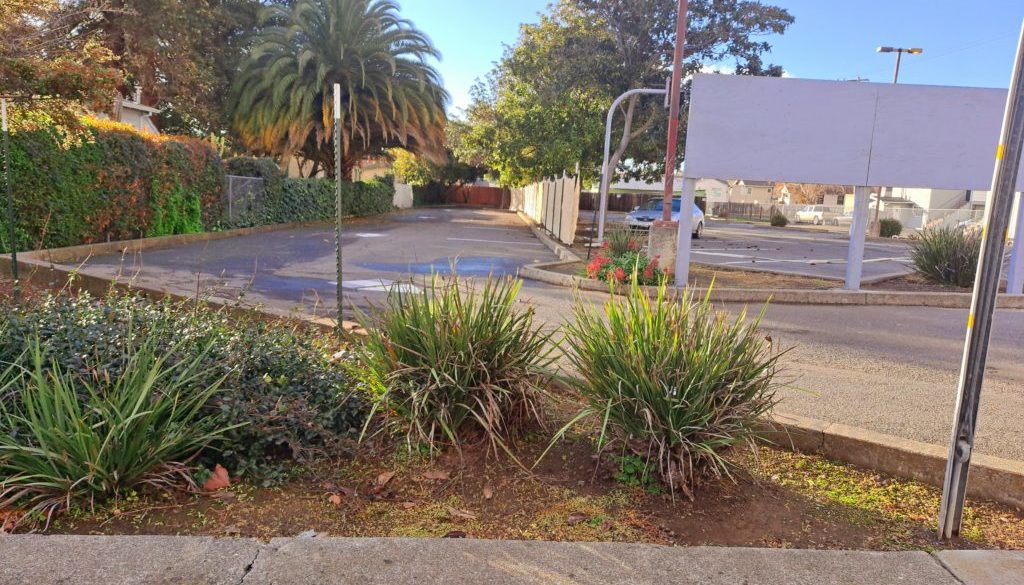
Photo: Proposed site for Hope Village
A collection of non profits and homeless advocacy agencies hope to create a temporary shelter site for unhoused Vallejoans, and the city council will be asked to approve or deny the move at special Monday meeting.
Meanwhile, residents around the proposed site said they feel “blindsided” by the encampment and worry that it is being rushed through city council.
The project, called Hope Village, will consist of a series of tents in the parking lot of The Church of the Nazarene at 929 Amador Street. It will consist of 40 tents that will hold a maximum of 65 people, according to the temporary use application given to the city. In many ways it will be a mini navigation center, with wrap-around services covering access to healthcare, social services, and other basic needs such as showers, toilets, and laundry. It was conceived as a way to temporarily shelter people being kicked out of Project Roomkey, which shuts doors in early January. Project Roomkey housed medically-vulnerable people during the height of Covid-19.
Behind the Village project are Vallejo Together, One Love Center for Health, Fighting Back Partnership, and 4th Second, members of which make up the governing board.
“These operating partners will facilitate secondary partnerships with utilities, waste management, housing navigators, and other service providers,” reads the application.
Currently the south side of the parking lot has been cordoned off to create space for the tents, which will be 6′ by 12′, with insulated sleeping quarters inside as well.
The church is in a residential neighborhood and some that live there are voicing concern about the project. I spoke with several neighbors and they all stressed that they want to see houseless people receive shelter, but they question how this site will be managed and the speed with which it seems to be going up with little outreach to— and no input from— the community. There have been no public meetings with residents from the City, the church, nor the organizers, something that is always done in these cases.
Two people I spoke with who are familiar with city hall want their names left out to stay out of the fray expressed doubt about the process.
“You have to speculate that the people proposing this have decided that this fast-track, uncommunicative approach is the most likely to get the outcome they want— it pushes everyone against the wall to make them look like they oppose homeless services if they question this.”
Resident Annie Wheat lives on Morningside Avenue which intersects with Amador near the church. She said that her neighborhood is very close knit, with people meeting weekly for cocktails. She said she first heard about it on December 8 through a neighbor; folks immediately made plans to meet up and discuss it, she said. By Saturday the 11th, they had organized residents to canvas the area with informational fliers and ways to get involved if they either supported or opposed the plan.
Those who oppose the plan or at least have questions say that they fear more problems with drug abuse, drinking, and drawing more activity to an area that they say is already fraught with issues of homelessness.
New Vallejo Together Director Dionne Carter says that the project has indeed been fast-tracked by its planning group, but that in her opinion, that is because concerned groups realized that there was nowhere to place people leaving Project Roomkey.
“This effort just started and it was a scurry to get people places in this freezing cold,” she said.
Carter, who said she actually lives near the church, says community outreach may have “just slipped” in an effort to get folks a warm place to stay. She also questions some stereotyping that might be going on about the people that will be residents of Hope Village.
“These are people aging out of foster care, domestic violence victims, veterans, the unemployed or underemployed, seniors, and those that are just having big life events,” she said. “I met a woman who was a nurse; she was diagnosed with cancer, lost her home, and now she’s in an encampment.”
Organizers are getting a lot of pushback from people who oppose the idea, said Carter. She said she understands the concern but that she’d like to see people with concerns put pressure on the City to get the navigation center open.
Ideally, the proposed Vallejo Navigation Center would have been up by now or at least in partial operation, but that project was plagued with doubling costs and the site it was slated to go into has been found to be contaminated and not fit for human use, according to Interim Housing Director Gillian Hayes.
Carter said that this project is a “housing first” model where vulnerable individuals are assessed and the assigned a strategy team to move them into permanent housing. She points to a program in Marin called Dignity Village which she said has placed upwards of 400 people in homes.
Wheat is quick to say that she realizes that these are stereotypes of homeless individuals, but she doesn’t have confidence in the people behind the project. Two neighbors I spoke with expressed frustration with Richard and Emily Fisher, the people behind the 4th Second nonprofit. Residents say that the Gofundme that they posted promised that they were open to communication with the neighborhood but that it hadn’t happened.
Wheat outlines her frustrations in an email to Richard Fisher.
“[You stated] ‘Please share my contact information with the neighborhood so they may reach out to me regarding any questions they have on the temporary use,’ she wrote. “I’m not sure what reply you are expecting that would lead to coordination with the neighbors. We’re here, just across the street! We’re asking questions that feel as if they’re falling on deaf ears. We are begging for open communication and transparency.”
Emily Fisher put fliers in people’s mailboxes on Monday, December 13 describing the temporary use permit.
I reached out to the Fishers and have not received a response.
“I think that [the organizers] got creative to try and solve the problem and that is really good,” said Wheat. “But I question the location to do it.”
Wheat said, were it going somewhere else in the city, preferably not a residential area, she would be the first one to step up.
“If this was in a better location, I’d probably be volunteering to help,” she said.
Some residents are also concerned that giving medically vulnerable people tents to sleep in is not ideal. But the Fishers state on their Gofundme page that this is a better option than letting people live on the streets or in their cars. They stress that this is a temporary solution and that part of their mission is to find permanent housing for people.
Indeed, 4th Second says it has begun pre-development of more than 65 housing units and is “committed to facilitation or directly producing” over 100 by 2025 and over 200 by 2030, according to its website. Emily Fisher is a physician, and she works with Vallejo Mobile Health to do outreach to medically vulnerable citizens; this same organization will provide such care to the residents of Hope Village.
Proponents of Hope Village point to a successful program in Martinez and a nascent program happening in Santa Rosa. But neither program exist in residential neighborhoods.
The agenda and staff report for Monday’s council meeting has not yet been posted, but sources say that the City will support the Hope Village project and recommend its approval.
Do you appreciate my local, independent journalism? Please consider supporting me on Patreon. You can learn more by hitting this link.



December 17, 2021 @ 3:46 pm
I suggest you go to the huge encampment on Couch St across from the motorcycle shop.
Take a good look.
Many cars and RV’s have been set on fire.
They like the proximity to the liquor store.
It’s a complete shit show and needs to be fenced off like the rest of Couch.
Problem is the railroad does not care…they are long gone.
December 17, 2021 @ 4:49 pm
I saw one of the fires! It was scary