Justice Is Blind, But Shouldn’t Turn a Blind Eye: Solano DA Krishna Abrams Put a Cop Busted for DUI on Stand and Didn’t Inform the Defense
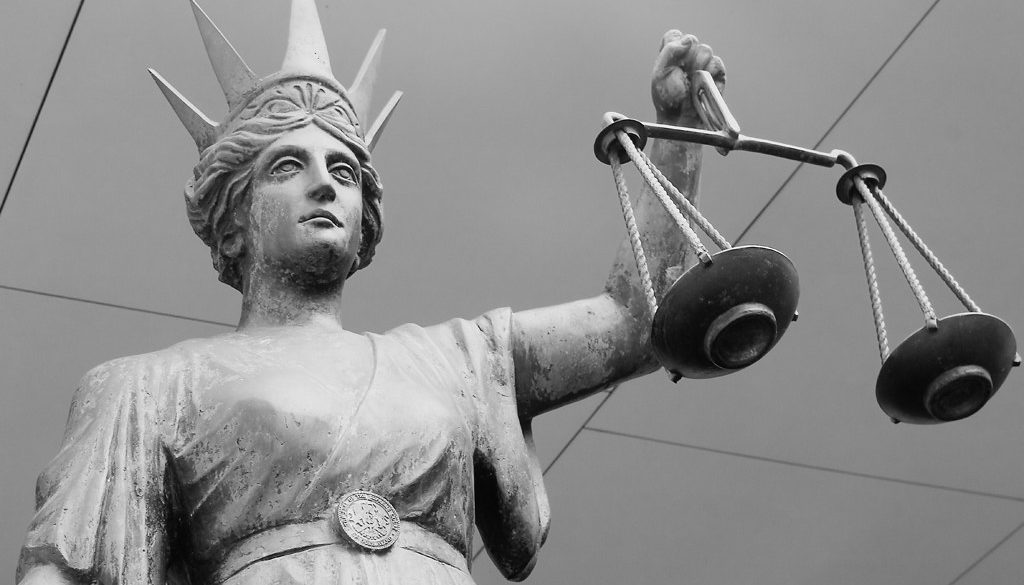
Photo Credit:
“Scales of Justice Brisbane Supreme Court=” by Sheba_Also 48,000 photos incl private is licensed under CC BY-SA 2.0.
The Solano County District Attorney’s Office allowed a Benicia police officer who had recently been arrested for driving under the influence to testify for the prosecution in a case, despite the officer still being involved in the case, court records show. Critics of incumbent District Attorney Krishna Abrams, who is currently running for re-election, claim that under her watch, evidence involving police officers is mishandled, especially that which should be turned over to defense attorneys. An employee in her office goes as far as to allege that she does so because she doesn’t want to see police officers “lose their jobs.”
I reached out to the Abrams campaign and they did not respond. [Update: after this story came out, I received this from the District Attorney’s Office: “In the interest of accuracy, the deputy district attorney who was assigned this case you are referring to was Roopa Krishna, unrelated to District Attorney Krishna Abrams, and who no longer works at the district attorney’s office.”]
One such case illuminates allegations that the DA’s office neglects to bring officer misconduct to light in court proceedings.
Former Benicia Police Officer Alejandro “Alex” Maravilla was arrested on September 29, 2019, charged by the DA with DUI on October 7, and testified in court on November 1 about a case involving a domestic violence call to which he was dispatched. The Solano County District Attorney’s Office did not notify the defense of Officer Maravilla’s arrest and charges, nor did they tell the defense that he was currently in the middle of his case when he was called as a prosecution witness.
District attorney’s offices are supposed to place any officers who have committed “moral turpitude” on the Brady List, which is a roster of members of law enforcement who have proved themselves to be untruthful or have criminal convictions.
The other half of the California criminal justice system, public defenders and other defense attorneys, have faced an uphill battle to out officers who have vi0lated ethics and are therefore bad witnesses. Senate Bill 1421 took effect in 2019 and allows records of use-of-force, sexual assault, and acts of dishonesty by police officers to be accessible via public record requests. It hasn’t been that easy, however. Though police departments are obliged to release the information when asked, obfuscation, delays and general compliance with the law have been serious issues. So much so, that a group of journalists at the California Reporting Project have been doggedly pursuing transparency through 1421 by amassing as many reports on California police officers that they can and making them public.
But prosecutors have always been required to turn over evidence of wrong-doing regarding officers it calls to testify. Despite SB 1421, prosecutors have been expected to run “rap sheets” on officers they want to put on the stand; the information about an officer’s criminal or unethical past can be valuable discovery for the defense, especially if an officer has a recorded history of lying.
Officer Maravilla was ultimately convicted for DUI after a hit and run incident in a bar parking lot, allegedly driving his car at a high speed on a county road, and eventually crashing into a big pile of dirt before returning to Benicia and being confronted by the California Highway Patrol. The Benicia Police Department was in fact the first on the scene after Maravilla returned, smelling “strongly” of alcohol and failing all sobriety tests, according to police reports. BPD did the right thing and turned the incident over to the CHP, who carried out the arrest. BPD will not say whether to not they fired Maravilla, but he left the department and was hired by the San Pablo Police Department in Contra Costa County in January.
Solano County Deputy Public Defender Nick Filloy filed court papers to impel the DA to honor full disclosure of an officer’s moral turpitude and turn over rap sheet information on police officers in a current case, The People v Dominic Milano.
“[There is a] documented history of the Solano County District Attorney’s Office in failing to provide Brady information,” he wrote in a motion for discovery in that case.
In December of 2019, Filloy submitted the failure of the DA to disclose Maravilla’s pending DUI case as evidence that Brady protocol is not respected by the office. Filloy filed the motion for his client, Milano. Milano is charged with attempted murder of three Vallejo officers. Filloy argued that the “credibility of the witness officers will be a primary contested issue” in the trial and that the DA is duty-bound to produce Brady evidence involving the officers. Filloy had initially requested the officers’ rap sheets in November of 2018; by December of 2019, the date Milano’s trial was supposed to begin, the defense had still not been given the information.
In his motion, Filloy calls out what he says is a regular policy by the DA to “not run the rap sheets of police officers prior to calling them as witnesses in court… they are unable to do so because they refuse to review information that is in their constructive possession. This policy results in the denial of due process to criminal defendants in Solano County.”
In the court filing, Filloy claims that Solano County Deputy DA Bruce Flynn told him that Chief Deputy District Attorney Paul Sequiera informed him that “the policy of the Solano County District Attorney is that they do not run rap sheets on police officers.”
Mia Adams, an employee in the investigations department of the Solano County DA, says that her concerns about discovery issues in cases has fallen on deaf ears by DA Krishna Abrams.
“I had meetings with Krishna Abrams to discuss serious concerns about the DA’s discovery/evidence in criminal cases,” she recently wrote in a letter to the editor in the Daily Republic and confirmed with me. “During these meetings, Abrams berated me, instructed that I do not document or send follow up emails, and advised, ‘that’s how cops get fired.'”
Abrams has received criticism by some who say she is “soft” on bad cops. Her office has failed to prosecute officers accused of wrongdoings, especially shootings that resulted in the deaths of subjects. Abrams recused her office from both the Willie McCoy and Sean Monterrosa cases, both of whom were shot and killed by Vallejo Police officers. Her recusal in the Monterrosa case led State Attorney General Rob Bonta to say that Abrams “unilaterally abdicated her responsibility as the elected district attorney and refused to conduct a review of the Vallejo Police Department’s investigation of the incident.”
Abrams has also once referred to the badge-bending by Vallejo officers as “rumor,” despite evidence to the contrary, even from the attorney for the Vallejo Police Officer’s Association that admitted that the badge bending occurred, something I reported in July of last year. The badge-bending report has come up in the Milano case.