Council to Review Mare Island Development Deal; Opponents of Plan Say Vallejo is Yet Again Selling Itself Short
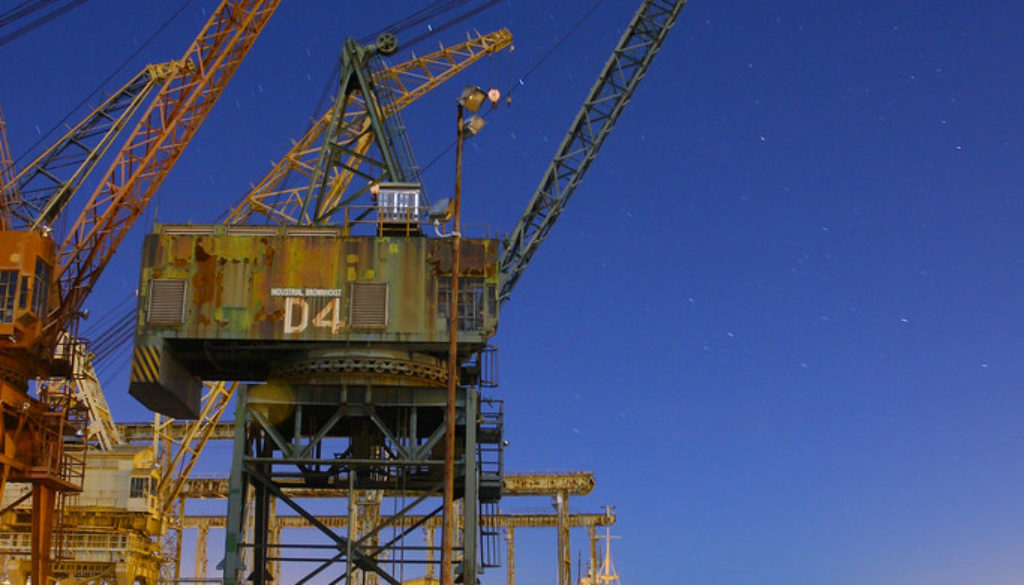
“Mare Island” by the_tahoe_guy is licensed under CC BY 2.0
The north Mare Island deal is up for review with the Vallejo City Council tonight and a purchase agreement could be pushed through soon.
A term sheet is a set of negotiable bullet points between developers and the city; the current sheet is the second one drafted for the Mare Island plan between developers Nimitz and Southern Land (SL) and the City of Vallejo, and it’s safe to say that it is controversial.
Opponents of the current sheet say that it favors the developers and not the City, while Southern Land says that the new sheet is necessary for them to take on the years-long task of transforming the island.
Mare Island is the proverbial gem in a town with “such a pretty face.” And that’s why the latest term sheet between the City and SL for its development is such a sore issue for some. The current term sheet– pushed by former City Manager Greg Nyhoff– caused some residents and current and former employees to lose confidence in him. It set in motion what is now a “whistleblower” lawsuit against the City involving three fired employees who say they were let go after they spoke out against it; they stand to reap upwards of $4 million if they prevail.
Open Vallejo was the first to write about how Nyhoff allegedly “weakened the deal” the City had with the developers. Indeed, if you look at the first term sheet and compare it to the second one that was rewritten after Nyhoff returned from meeting with SL in Tennessee in the fall of 2019, there are some noticeable differences.
The difference in term sheets post-Tennessee is pretty stark: 157 acres of prime Bay Area real estate that had previously had benchmarks and deliverables attached to it were now only going to cost the developers $3 million, with no guarantees for performance.
The $3 million dollar amount is an incredibly low figure for Bay Area real estate. Last year, the Coast Guard sold 58 acres of land in Concord for $1 million per acre. Indeed, an ABC 7 report showed that San Francisco and the Bay Area is the most expensive place in the world to build and purchase land. Though Vallejo is no SF– yet– even if north Mare Island went for half of SF’s rates it would be $208 per square foot. For Vallejo, that means $64,400,000 for the 300,000 sf at stake.
The original term sheet, unanimously approved by the council, suggested leasing the land with a caveat that the contract could be yanked if if no construction was built. It had a ground lease with purchase option, with extensions of up to 19 years. Extensions would be based on milestones that could be met by building on the southern part of the island. The city would lease the north for $451,000 annually, which would cover our HUD demo loan payments.
During the first term sheet go-round, the City acknowledged just how bad the soil is on the north side, which is why it outlined a lease agreement and put deliverables on the southern end.
Having no development guarantees or milestones from a developer has some Valejoans nervous. We have a history of $1 per year land leases going to big pocketed developers like Lennar.
Both Thomas D’Alesandro, president of West Coast operations for Southern Land, and Sheryl McKibben, VP for marketing and relations, have said that Lennar did in fact contribute a lot to Mare Island’s rehab.
“We recognize the significant time and resources they spent working to environmentally clean up and develop various portions of the island,” said McKibben in an email to me. “It is because of these efforts that we are in a position to continue to develop certain parts of the island.”
The first term sheet that has now been replaced with the current sheet acknowledged how long it would take to make the area usable for building: Approximately 15 to 20 years. It leveraged north Mare Island’s worth to the city by making Nimitz build on the southern end of the island, pay off a HUD loan for the city, and take care of security. In short, ‘OK, you want exclusive rights to build on our gem? You have to fix the southern part for us.”
The City has outlined a primer for why it approves of the latest term sheet, which was drafted in December of 2019. First it claims that Southern Land will be “unable” to attract investors if it does not own the land outright, something that the developer agrees with, according to McKibben. In addition, the City says it would not be able to “perform” on the HUD loan or demolition of the area with the old sheet.
Vallejo also says that there is no “specific or backbone infrastructure plan” in the first term sheet. This is incorrect. The first term sheet set a milestone at year three. From the City’s own staff report on that sheet:
“The Term Sheet provides clear deliverables and extension milestones at 3-year increments that ensure key development requirements are met, resulting in a minimum of 100,000 square feet of historic restoration, renovation, adaptive re-use, new construction, or a combination is completed every three years on Mare Island (north or south).”
In its reasons for changing the term sheet, city staff cite the fact that there are new SL staff involved, Covid-19 hit, and that the original soils report has been updated to reflect costs ranging from $19 to $48 million to prepare the area for building.
Opponents say that the new term sheet has removed benchmarks and milestones essential to holding SL accountable– especially after turning over valuable public land.
“Performance guarantees are not only par for the course,” said one city insider, “they’re necessary for development of public land to ensure performance.”
Term sheets for other Vallejo projects such as Blue Rock Springs and Costco Fairview do contain measurable deliverables for the city, as well as benchmarks. The same can be said for San Francisco’s Hunters Point and Treasure Island deals.
McKibben told me that the north part of the island is the “island’s gateway.”
“It has many challenges and will be very expensive to remediate,” she said. “But Southern Land believes it is worth doing. The combined benefits of undertaking place-making the entire island– rather than just the southern portions– will be greater than the sum of its parts.”
Both the City and SL estimate that the cost of remediating the soil on the northern end could run from $20 to $50 million, with the addition of utilities such as water and sewer adding “tens of millions of dollars more.” Southern Land claims that if it purchases the land, it will be motivated to do all these improvements.
SL also says that it would be “near impossible” to gain the interest of private capital to invest in property that’s not owned by the investment group. But often times once there is a permit or transfer phase of property like this, financing pivots to a lower bank loan instead of speculative investments.
The City Council meets in closed session to discuss this deal this evening.
This story first inaccurately put the Concord deal at $1 million per square foot. It was $1 mil per acre. I regret the mistake.
Do you appreciate local, investigative journalism? Please consider supporting me on Patreon.