Independent Expert Also Rules Suicide In Green Case, But Many Still Insist There Had To Be Foul Play
*Author’s note: It is a general rule that journalists do not cover suicides. Mainly this is because studies have shown the when suspected suicides are covered, suicide rates go up. This case initially appeared to have involved foul play, which I reported. It has since spiraled into other things, with many rumors, conjectures, and even threats to innocent people on social media. I believe that getting as much information out there about it as possible is the right thing to do at this point, in honor of everyone involved and a concerned community.
****
The death of Nitsa Green in her home on Monday evening of what was first reported as apparent stab wounds has been ruled a suicide by both Vallejo police and the Solano County coroner’s office, but friends and family are having a hard time wrapping their heads around the idea that she would take her own life, and certainly not do so in such a seemingly violent manner.
Green, 40, was found in her home in the 300 block of Contra Costa Street in Vallejo on Monday after paramedics responded to a report of a “woman down” on her back porch. The neighbors called 911 after discovering her there. The watch commander log for the case stated that the fire department suspected she had been stabbed and flagged it as suspicious, so police investigators were brought in to assess the situation. What the police saw led them to ultimately believe that she had taken her own life.
And what they saw was indeed horrible. Though the coroner’s report is not yet released and the police have not shared specific details, judging from the scene of the event viewed by myself, Green’s last moments were very tragic.
Civil rights attorney and former deputy coroner Melissa Nold at first viewed the pictures of the scene and didn’t find them consistent with suicide.
“Who would walk around the house stabbing themselves in multiple areas, knowing their significant other would find them in that condition?” she asked, adding that when after viewing photos of the scene, it appeared to her that Green may have been trying to escape an attacker.
Nold wanted to see for herself and perhaps give the family some answers. She viewed the body at the mortuary on Thursday and found that the wounds did indeed “appear to be self-inflicted.”
“No sign of struggle or anything like that,” she said. “The blood makes sense now that I’ve seen the body.”
According to Nold, it appears that Green died by cutting her wrists and throat. Nold was unable to see any defensive wounds or bruising. She bled out and lost so much blood that her body could not be prepared for a viewing at a funeral, she said. This, coupled with the fact that Nold was told that surveillance footage at both entrances to the house do not show anyone entering or leaving, and in fact capture Green’s last moments on the back porch, lead her to believe that she died at her own hand.
Family and friends have been reeling all week, all describing a vivacious, life-loving woman who could barely clip her nails without fear of nicking herself. In the fog of grief of shock— along with all the ‘why?’ questions that come up when someone we love has suddenly left us— they all are searching for answers. Did a killer enter the house through windows not surveilled by cameras? If so, the person would have to have used a ladder. Did a killer meticulously wipe away all signs of their presence? Nold said it is virtually impossible for an attacker to have exited the house leaving zero trace. But the fact that the family alleges they were told that there was no autopsy, and that they feel the police didn’t do enough investigating, fingerprint analysis, or questioning of neighbors has left the door open for speculation. The idea that this beautiful person took her own life is much too painful. It cannot be true.
Her mother, Ariadne Green, alleges she was initially told that her daughter had multiple stab wounds to her face, neck and wrists. Again, in the fog of those first hours and days, both the police and the family were trying to piece together what happened. Her injuries were so graphic, she says she was told, that she would be unable to have an open casket funeral, which further bolstered the idea that her face had been viciously attacked. To date, the police and coroner have not given her the information that Nold gathered, though when the Times-Herald spoke to the coroner’s office, reporter Thomas Gase was told that Green had “slit her wrists.” Nold had to tell the family what she saw herself, which she says is not fair to her, the family, or the community, which has been fomenting rumors and untruths on social media for days.
Green also alleges that Vallejo police initially told her things that led her to think there was a murder investigation in the works, such as that there was a lot of blood at the scene and that police had asked her daughter’s fiance to come in for questioning. He did go to the station and he talked to the police. The family — and he himself — say his alibi was solid. In fact, he says he has been begging the police to release a statement saying he has been cleared of any suspicion. On top of mourning, he said, he has to deal with angry, scary people who want to cause him harm.
The complex nature of what the family first say they were led to believe, coupled with areas in the blood evidence viewed by myself that could appear to show a struggle, initially made her mother and her friends insist that there is no way this was a suicide. Nitsa’s mother also feels that the initial communications she got from law enforcement led to social media speculation and even libelous posts about the fiance being the culprit.
Then there was the fact that her daughter had complained of a strange man in a car parked outside her house for “hours” on several occasions, according to her mother.
Nold thinks the police could have handled this situation much better, and she met with them to offer her feedback, she said. A frequent critic of the Vallejo force, Nold has represented the families of people killed by Vallejo police officers.
“Unfortunately, the department was vague [at first] and suggested she was murdered and interrogated people and there was a domino effect for everyone involved and everyone who investigated it,” she said, adding that there is no evidence on Green’s body to support homicide.
“They shouldn’t have told the family she was stabbed and that it was a possible home invasion,” she continued, citing information she got from Ariadne. “Their carefreeness triggered a chain reaction of suspicion and death threats directed at Nitsa’s fiance.”
Entering into Green’s small house, one could view the bloody scene, which had yet to be cleaned, but it was apparent that her house was normally kept tidy and was full of words of encouragement. Judging from desk planners and things around her apartment that I viewed, she seemed to be planning for a future.
A sign in cursive script above her kitchen reads, “Gratitude Turns What We Have Into Enough.” In her bedroom, facing her bed, stand two large “vision boards,” with images and words to match life goals she had: “Go Big,” “Positive Thinking,” “Find Joy Every Day.”
Green was engaged to be married and, according to her mother, was taking fertility treatments to try to have a child. Her fiance said that the wedding had been put on hold to concentrate on having a baby first. She had recently gotten a business license, according to her mom, and was going to start her own baking business. Her cakes brought her joy and were colorful testaments to her colorful personality.
Her day planners — two regular calendars and one a “gratitude” journal — reveal a pedicure appointment the day before she died, and an appointment with a banker to open a new account on the day she died. She also wrote down that she needed to get a money order that day. Her fiancee confirmed that she used it to pay his car payment.
In her gratitude journal dated Jan. 23, she wrote “Today I am grateful for my health, my continued growth, the abundance that comes in; grateful to enjoy another day on this earth.”
On Jan. 28 she wrote, “Today I am grateful for my earth angels giving me messages. Thankful for the smile that the guy who wanted to wash my windows gave me when we gave him $10.”
There are other entries that outline some other things going on in her life. Green worked at the meal kit company Blue Apron and was involved with a worker’s compensation case, for which she was communicating with a lawyer and about which she was very frustrated, according to her mother. She also notes “harassment” in several entries, with no context. On a “to do” list from the previous week, it reads, “Attend group for psychiatric care.”
When asked why her daughter was in a therapy group, her mother, a former therapist, says that she had no major psychological problems and was “absolutely not” clinically depressed. Her work injury had gotten her down, she said, and she felt a bit closed in after being stuck inside a lot due to her injured knee.
But, said Ariadne, she took the time stuck indoors and not working to take online business classes, plan her baking venture, and hopefully work on starting a family.
“It doesn’t make sense,” she said.
On Friday, still not comfortable with the police and coroner’s findings, Ariadne said she was reaching out to state Attorney General Rob Bonta’s office. The Vallejo Police Department has been under criminal review with the attorney general’s office since May 2021, after officers shot and killed Sean Monterrosa amid the George Floyd protests of June 2020.
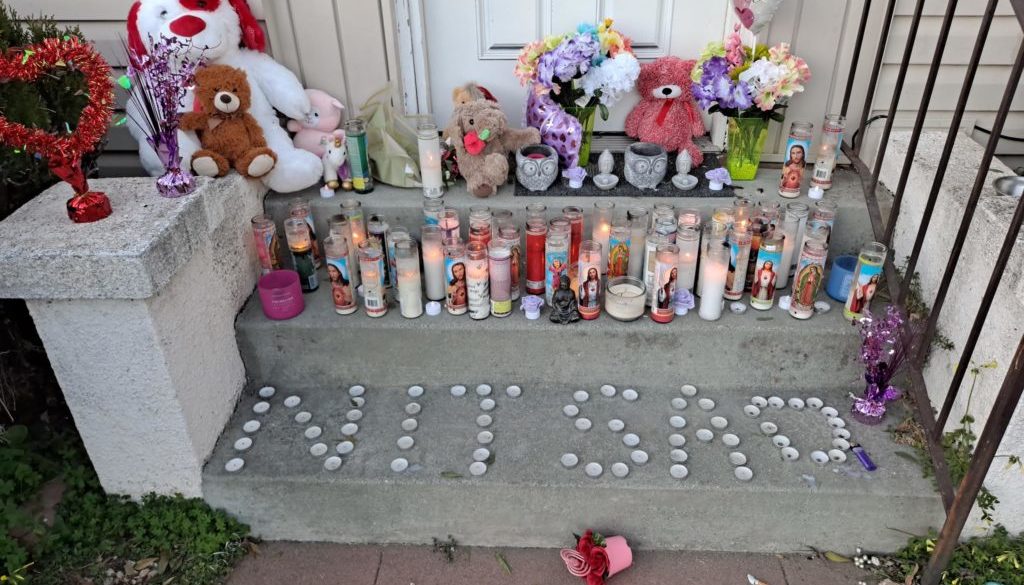
Several memorials have been planned for Green, and her doorstep is covered with stuffed animals, candles, and handwritten notes. Her coworkers at Blue Apron are also planning to release white doves in her honor.
“Everyone loved her there,” said her mother. “Everyone loved her everywhere.”